Let’s face it, we all really dislike going to staff, management and leadership meetings. They drag on and on and on. But we know that there’s a reason for them or why would we be having them, right?
Well, how many of you run the meetings? Who of you has to structure, organize, send out the reminds (invites), create the agenda, etc, every meeting? It can be overwhelming and when you finally put it all together (last minute usually) it takes way more time to have the meeting than you alloted time for.
Want a few tips to make them more efficient? More productive? And keep it within the time you allowed? Ok, if you’re interested, let’s get started…

“ A race car driver talks about slowing down in order to go fast. Too many executives have adrenaline addiction and lose sight of the key principles, objectives, core values and need for communication.” Patrick Lencioni
You might want to sit down and calculate the price of the meetings. Each one! How? simple…
Hourly wage of everyone who is coming to the meeting (you can figure out the hourly pay of the salaried person too) then multiply it against the length of the meeting.
How much is this meeting costing the company? Is it worth it when you times it by each day, week, month and year? Then subtract it from the production time it takes away from? Or is it benefiting your bottom line, improving your productivity? Making things more efficient?
Take a look at whether or not the meeting is started and finished in the alloted time, if not, then you are spending wayyyyyyy to much time on allowing verbal diarrhea … either have fewer people at the meeting or be firm and limit their talking and keep them on track. Yes, I’m being harsh, trust me… your bottom line will thank you.
For example: The discussion between you, the person leading the meeting and one person on your team or group, who is having a discussion on one particular subject triggered by the agenda. If you have 10 people in this meeting, you are wasting EVERYONE’S time. Take this discussion to a side huddle. You and that person are costing the business money.
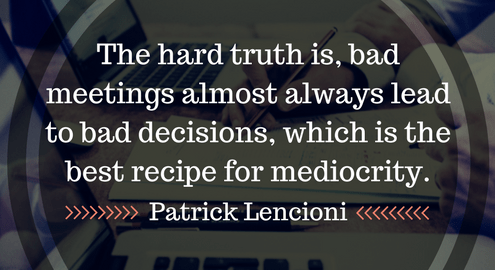
Don’t waste time in meetings or make it boring. Meetings ARE important, if done right.
They can be productive to the company and can increase the bottom line but they need to be structured and kept on track. Don’t be afraid to be firm. Drive a high-performing meeting instead of a gab session. Save those for off hours.
- Decide who is essential to the meeting and ONLY invite those who HAVE to be there. Everyone else can get the cliff notes via email, bulletin notices, side huddles, etc
- Have a guest appearance of someone who is critical to that particular meeting topic. Keeps things interesting and on focus. Get their input then let them leave.
- Have a well thought out meeting agenda ready, well in advance, sent out to those coming to the meeting so they have their thoughts, questions or ideas ready for the meeting.
– Such as: What is the purpose of this meeting? What is the desired result of the meeting? Who is needed at the meeting? etc - Start time and end time ( make sure to STICK to this whether you have discussed everything on the agenda or not) Stop watch, laptop countdown, whatever it takes to keep everyone on topic
- You can never have too many meetings (unless that’s ALL you do, rather than focus on productivity), but if they are redundant and inefficient than you can. Time wasted in meetings is the major killer of any business. Make sure you are focused, efficient, organized and productive. Remember the followers are looking at the leader for direction. If you have diarrhea of the mouth so will they. If the business fails, it’s not the employees or teams fault, it’s the leader who gets thrown under the bus.
= I get asked a lot about how often to have meetings and what types, so here is my Roadmap of milestones (Meeting System)
— Annual Planning/ Leadership Retreat (2–3 day off-site)
— Quarterly Leadership Meetings (1–2 days off-site)
— Monthly Company Meetings (2–4 hours on-site)
— Weekly Meetings (1 hour on-site)
— Daily Huddles (15 min on-site while standing) Or do the Monday touch base, strategy of upcoming week (30 min) Friday recap of past week and see what needs tweaking, etc (30 min)
— Workshops (5–30 min on-site)
— PDR:– Plan, Do, Reviews of event or projects (15–60 min on-site)
— Skill Development (1–2 hours on-site)
If you want your company to be a success, then plan for success and stick to the plan. You might need course corrections or adjustments done along the way, like an airplane going from point A to point B, but keeping focused on the long term goal is the best way that I know how to get where you want to be, both personally and professionally. Aim higher than you think you can go with your business and keep your eye on that goal.
See you in the next leadership article on Distraction Deviants and Enablers of Leaders

 Tammie Lynne